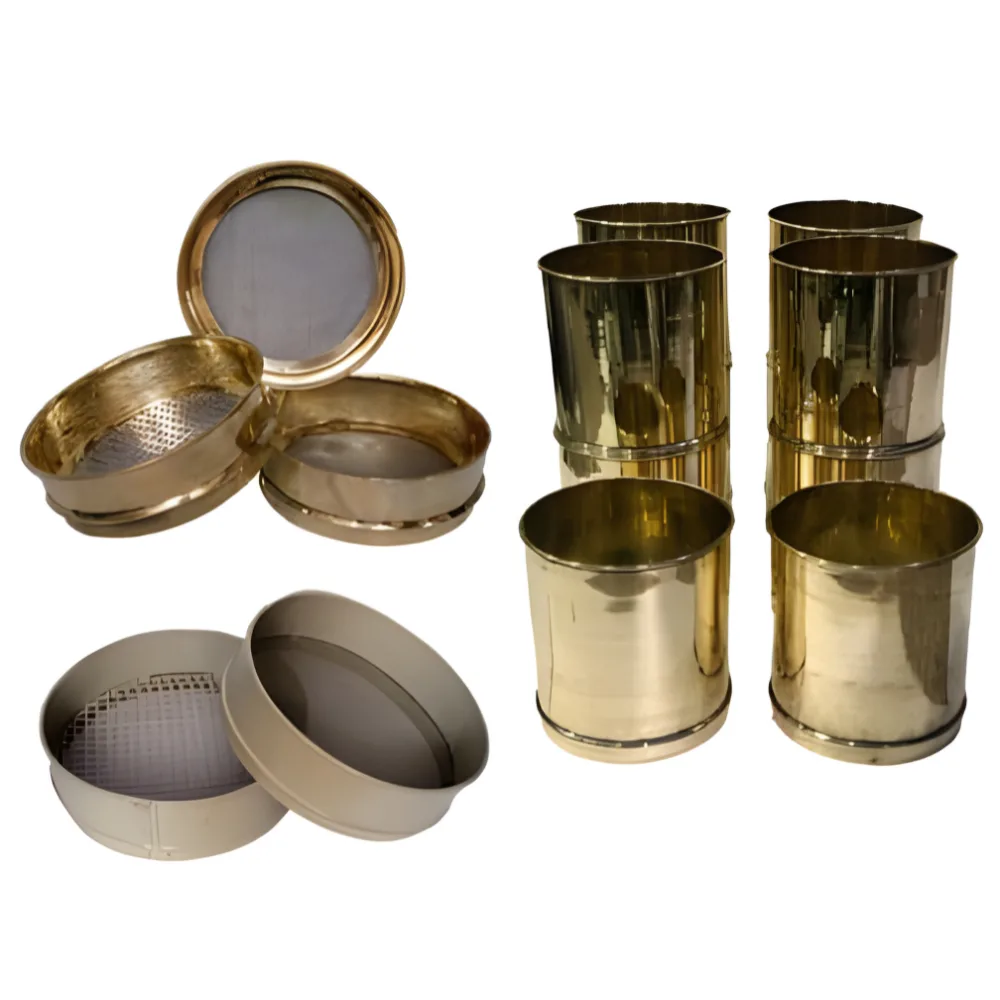
Ro-Tap Sieve Shaker Manufacturer in Delhi & India

Ro-Tap Sieve Shaker for Laboratory Particle Size Analysis - Labtek Enterprises


    Ro-Tap Sieve Shaker for Laboratory Particle Size Analysis

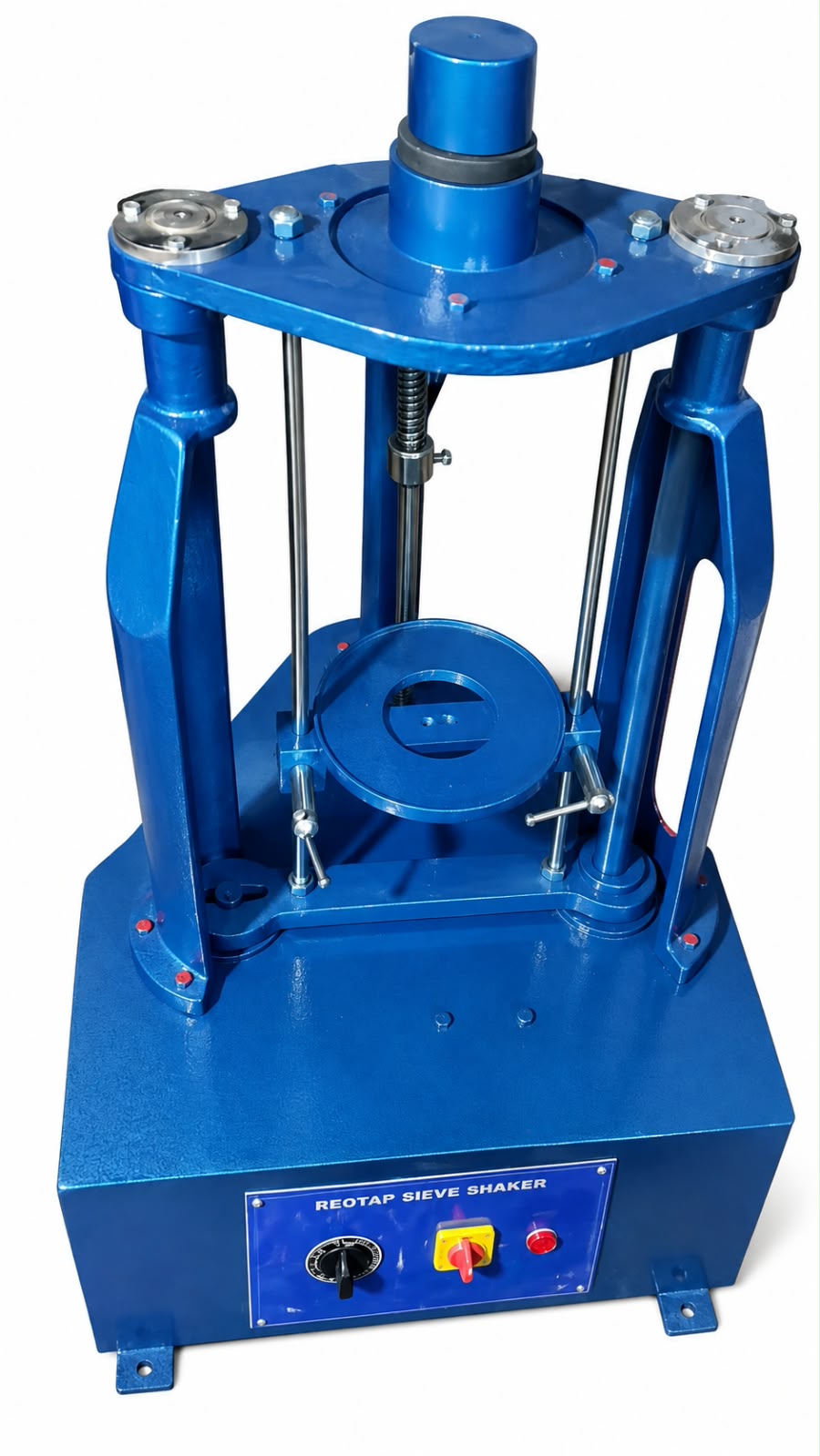
    Labtek Enterprises offers a robust Ro-Tap Sieve Shaker for mechanical sieve analysis, particle-size determination and material gradation in laboratory and quality-control applications. The machine combines oscillating sieve movement with a tapping action to help particles move efficiently across the test-sieve surface.

    The combined mechanical action is designed to reproduce the principal movements involved in manual sieve analysis while providing a more uniform and repeatable testing cycle. It is suitable for laboratories working with aggregates, soil, minerals, cement, powders, ores and other granular materials.

    Typical Technical Configuration

    • Sieve Compatibility: Designed for laboratory test-sieve stacks, commonly 200 mm / 8 inch diameter
    • Sieving Motion: Combined oscillating or circular movement with mechanical tapping
    • Application: Dry particle-size analysis and material classification
    • Operation: Motorized mechanical sieve agitation
    • Construction: Heavy-duty laboratory machine construction
    • Sample Types: Aggregate, soil, mineral, cement, powder and granular materials
    • Test Control: Timed operation depending on supplied configuration
    • Installation: Suitable for laboratory bench or stable platform installation depending on model

    Traditional Ro-Tap-type sieve shakers use a combination of horizontal oscillation and vertical tapping to promote efficient passage of particles through progressively smaller sieve apertures. Final motor rating, sieve capacity, timer range and electrical specification should be selected according to the required laboratory configuration.

    Working Principle

    The Ro-Tap Sieve Shaker agitates a vertically arranged stack of test sieves through two complementary mechanical actions.

    The oscillating or circular movement distributes the test sample over the sieve surface, while the tapping action applies an additional vertical impulse to the sieve stack. Together, these movements encourage particles to present themselves repeatedly to the sieve apertures.

    Material smaller than the opening of a particular sieve passes to the next sieve, while larger particles remain retained. After the selected test duration, each retained fraction can be weighed to determine the particle-size distribution of the sample.

    This operating principle makes the machine suitable for repeatable sieve analysis in production laboratories, research facilities and material-testing laboratories.

    Key Features & Benefits

    • Combined oscillating and tapping sieving action
    • Supports repeatable mechanical particle-size analysis
    • Suitable for laboratory test-sieve stacks
    • Ideal for routine dry sieve analysis
    • Helps improve distribution of material across sieve surfaces
    • Reduces dependence on manual sieve shaking
    • Useful for aggregate, soil, mineral and construction-material testing
    • Suitable for quality-control and research laboratories
    • Heavy-duty mechanical operating principle
    • Can be configured for commonly used 200 mm / 8 inch test sieves
    • Supports material gradation and particle-size classification
    • Designed for consistent laboratory testing workflows

    Ro-Tap Sieve Shaker – Frequently Asked Questions

    What is a Ro-Tap Sieve Shaker?
    A Ro-Tap Sieve Shaker is a mechanical laboratory sieve shaker that combines an oscillating or circular sieve movement with a tapping action for particle-size analysis.

    What is the Ro-Tap Sieve Shaker used for?
    It is used for sieve analysis, particle-size determination, material classification and gradation testing of granular or powdered samples.

    Which test sieves can be used?
    Ro-Tap-type laboratory machines are commonly configured for standard 200 mm or 8 inch test sieves. The exact sieve capacity depends on the supplied machine configuration and sieve height.

    Why does the machine use a tapping action?
    The tapping action provides an additional vertical impulse that helps redistribute particles and promotes their passage through suitable sieve apertures.

    Can the equipment be used for dry sieving?
    Yes. Ro-Tap-type sieve shakers are widely used for routine dry particle-size analysis.

    Which materials can be tested?
    Typical applications include aggregates, soil, minerals, cement, powders, ores and other granular laboratory samples.

    Is a timer available?
    Timed operation is commonly provided on laboratory Ro-Tap-type sieve shakers. The exact timer specification depends on the supplied model.

    Where can a Ro-Tap Sieve Shaker be used?
    It is suitable for quality-control laboratories, material-testing laboratories, research facilities, educational laboratories and industrial testing applications.

    Test Sieves

    Test Sieves

    Test Sieves